
How I'd help Matt Pittman of Meat Church BBQ add $500K+ in revenue over the next 12 months
This is a series of public letters to founders whose brands and products I already like and who have companies that can realistically add another $500K+ in revenue over the next 12 months with a strategy based on growth by subtraction.
My goal with this series is to start conversations with these founders or catch the attention of others who realize they’re leaving money on the table and that I can help.
Anna Reich’s public letter to Jay Clouse provided half the inspiration for this one, and my belly provided the other half. Or rather, Meat Church BBQ did. Since I discovered Matt Pittman’s YouTube channel and started doing what he recommends, people have told me that my barbecue is the best that they’ve ever had. I smile and thank them while knowing that barbecue isn’t all that difficult if you follow the right recipes. I use Matt’s.
(Sidenote to all readers: Everything that follows I pulled from publicly available sources. I didn’t do anything weird, stalker-ish, or sneaky. Instead, I used the puzzle pieces to come up with a plausible picture.)
Dear Matt,
I’ll start with a story about the time I got mistaken for you.
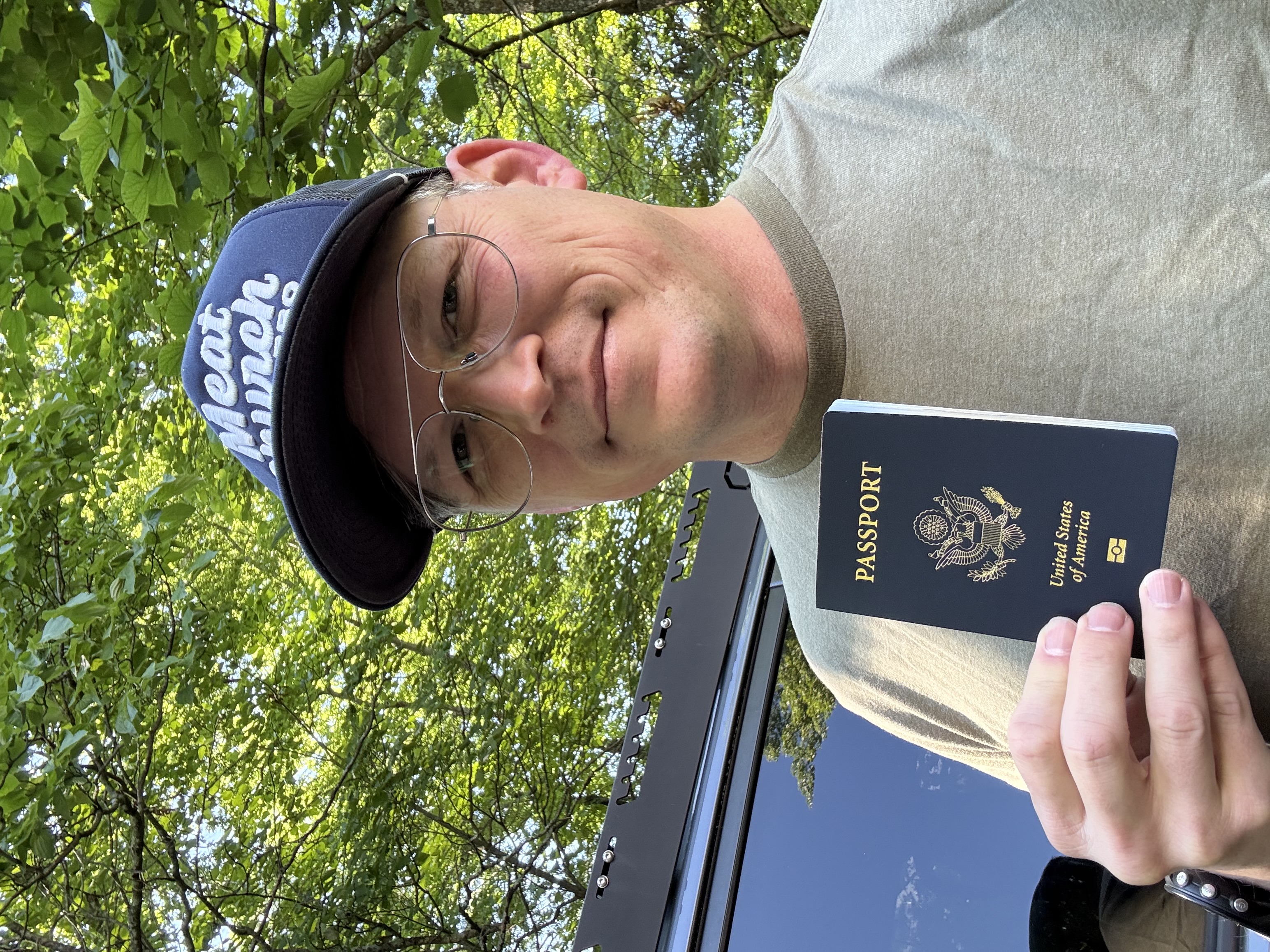
My wife and I were going to Austria to celebrate our fifteenth wedding anniversary, and I needed to renew my passport. So I drove from Knoxville to the passport agency in downtown Atlanta, and around 11:00am I got a text saying that my new passport was ready for pickup.
I happened to be wearing my favorite hat, a navy Meat Church BBQ snapback, and as I was leaving, a security guard glanced at it and asked me, “Is that your channel?”
He thought I was Matt Pittman!
“No, I’m just a fan,” I said, and we talked barbecue for a couple of minutes.
That experience is what barbecue is all about for me. Slowing down for a moment (or a whole Saturday), noticing people, bringing levity and a smile, salt and light. The effort doesn’t cost much, but it means a lot.
Maybe that’s why I like your approach. From what I can gather, barbecue goes deeper than recipes and techniques for you. Barbecue requires us to slow down, be patient, and pay attention. Barbecue is the doorway to hospitality, friendship, and deeper connection.
People are even hungrier for that connection right now than they are for smoked meats and killer sides, but let me get to the meat (had to) of this letter.
I believe some tiny insights and corresponding tweaks to Meat Church’s growth strategy could add $500K to $1 million to your topline over the next 12 to 18 months. Here is what’s on tap:
- Status Quo → You’ve built something extraordinary.
- Current Strategy → Lifestyle Media Company
- Meat Church Cookbook → You have better opportunities.
- Opportunity → Thousands more customers like me
- Quick detour → Pursuit Spirits Video
- Email List → Getting more ARR out of it
- Shoot me a message here or text me
Let’s get to it.
Status Quo
Meat Church has publicly reported eight-figure revenue with a team that's stayed deliberately small (~10 employees). Dang. Most companies the size of yours have a team 5 to 10 times larger.
From the operational standpoint, you’ve built something extraordinary: a founder-led brand with significant distribution leverage (1.17m subscribers on YouTube alone, plus Insta, FB, and TikTok), an easy-to-understand, consumable product (rubs, apparel), and strong channel partners (Ace Hardware, Buc’ees, etc).
In early 2026, you diversified beyond your products and brand partnerships (Traeger, Yeti, Cowboys, et al) to equity stakes in (Pursuit Spirits, EIGHT Elite).
Let me read between the lines and summarize the current growth strategy.
What Your Current Strategy Appears to Be
The most coherent version of your 2026 strategy based on my research goes like this:
Meat Church is becoming a lifestyle media company that can cover the range of your audience’s interests, including Texas, BBQ, being outdoors, hunting, fishing, bourbon, beer, and football. The podcast launched and expanded the content platform that raises awareness for the core barbecue brand and adjacent categories, strengthens sponsorships and partnerships, and drives revenue.
This is the MrBeast model (media company with satellite brands and products) filtered through your interests and rooted in Waxahachie.
At a high level, Meat Church is all about what I’ll call “the slow-cooked life.”
Meanwhile, a couple of paragraphs from your 2023 Phi Delta Theta interview caught my attention:
“When asked where he sees Meat Church in five years, Matt acknowledges that it is difficult to be strategic because the company has grown and changed so much. They enjoy being small and nimble, and Matt likes to be the face of the brand; he loves cooking and teaching. He wants to continue inspiring people to cook and make memories around food. He’ll be doing this through his YouTube channel, in-person cooking classes, recipe development, and writing a cookbook. You will also find him tailgating in the Cowboys’ parking lot with his Phi Delt chapter brothers, creating memories with slow-cooked food grilled over a fire.” (bold mine)
There aren’t any in-person cooking classes in the calendar, and I’ll talk about the cookbook idea in a moment.
I had my plane tickets booked for the 2026 Block Party, which you canceled because your kids sports were keeping you too busy to host. I totally get it. Family comes first. Each of my three kids had a different extracurricular this spring (theatre, soccer, baseball), and it was… a lot.
Is what you said in the interview still true? Are you finding it difficult to be strategic in 2026?
If so, that wouldn’t surprise me. All of the biggest names and brands in the BBQ space have a slightly different business model and strategy. I’ve analyzed most of them, including Malcolm Reed (HowToBBQRight), BBQ Pit Boys, Susie Bulloch (Hey Grill Hey), Jeremy Yoder, (Mad Scientist BBQ), Chuds BBQ, Aaron Franklin, Smokin' Joe's Pit BBQ, and Meathead (AmazingRibs.com).
There are so many tempting ideas and opportunities, and even a “good” idea can prove to be a distraction, from the strategic standpoint.
For example, how about that Meat Church cookbook?
It’s an obvious move. Franklin Barbecue's cookbook sold 200,000+ copies. Rodney Scott's cookbook sold between 30,000 and 50,000. Susie Bulloch just published her cookbook, Backyard BBQ Hero, back in April.
Meat Church has more reach than any of them. This is achievable for someone in your position, and you can certainly find a worse opportunity. Here’s some rough math based on my research:
- A mid-tier food influencer cookbook earns an advance of $75,000 to $150,000.
- If royalties are around $3 per copy at a $35 cover price, then you would need to sell 50,000 copies to earn out your $150,000 advance.
- The timetable is 18 to 24 months from contract to shelf, with significant time required for recipe testing, writing, and photo shoots.
However, unless you just want to put a book out into the world, which was true for me with both my children’s book Grabbling and my business nonfiction book Free Money, you do have better opportunities.
By “better” I mean ones with more financial upside, with more strategic alignment with what you’re already doing, and with less overall effort required on your part.
For example, how about a “How Flavor Happens” series?
Long before I discovered Meat Church BBQ, I read Meathead’s article, “The Science of Rubs.” What is your take on how barbecue takes on flavor and why Meat Church rubs work so well?
How does flavor even happen with barbecue?
The title “Science of Rubs” or “Science of Flavor” would be off brand, but I have a hunch people would like to hear you explain how flavor happens, specifically why certain rubs compliment certain meats, woods, and preparations; how to build a spice profile and layers of flavor; and what actually happens with smoke, fat, moisture, and bark formation over time.
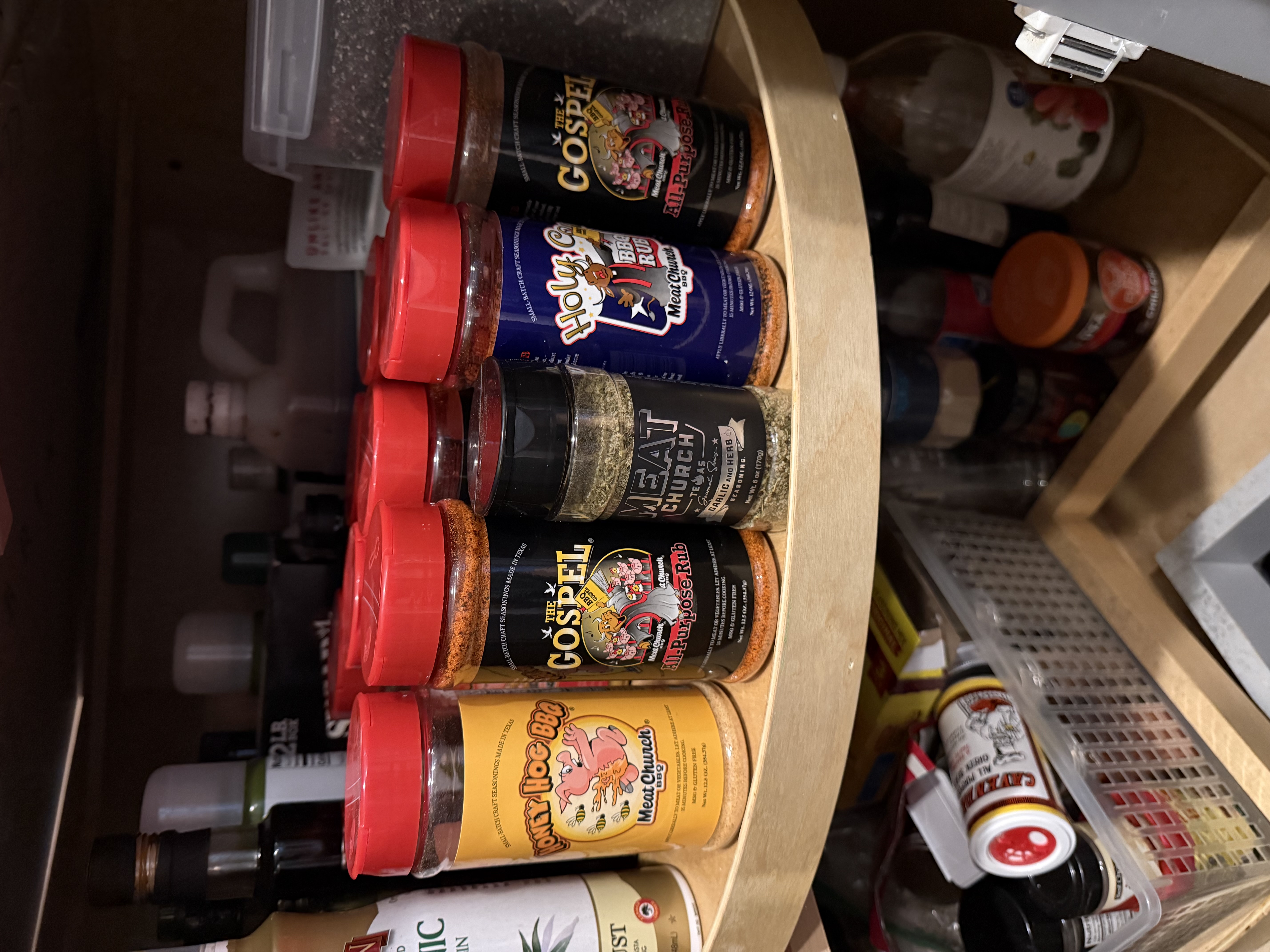
A 10-part series could drive 500,000 to 1,000,000 cumulative views in year one. Ad revenue, sponsorship revenue, and product sales from the series could push its long-term value into multiple six figures. Thousands more customers like me will lose count of how many bottles they have gone through.
Behold Exhibit A, the Meat Church section of the Church household’s spice cabinet.
Before we move on, let me make a quick detour to your video focused on Pursuit Spirits.
I enjoyed it because I love bourbon and occasionally watch bourbon-related videos. Matt Pittman plus a Pursuit barrel pick, what’s not to love?
Apparently, I was of the minority opinion.
That Pursuit video has gotten 28K views in 5 months. Despite the Pursuit Spirits investment offering a genuine storytelling opportunity, it has one third of the views of your latest video (”I made Pulled Pork tastes like Whole Hog BBQ!”) which has gotten 76K views in 5 days. It comes nowhere close to the lowest of your top 100 videos (~333K). Your top video has 5.2 million views.
Currently, lifestyle/entrepreneur framing doesn't do well with your audience. Your top-performing videos focus on recipes and techniques.
If I had to guess, you made the Pursuit video because you’re an investor, yes, but more importantly because picking a barrel with friends is fun so why not? You’re to that point where you can and should do things just because they’re fun. Life’s short.
That said, I've spent the last several weeks studying your business, and if I may be so bold, I believe I see some ways for you to tighten the overall growth strategy and the YouTube content strategy and drive significant revenue around the core product line.
You’ve got a $20M business and a dozen directions it could grow. That’s one of the most exciting and dangerous places for a founder to be.
There’s no time like the present for growth by subtraction with the help of a 1-page strategy written in plain English:
- What can you remove?
- How can you do less but better?
- What is one thing that, if you were to do it, would make everything else easier or unnecessary?
For example, what if we start with your email list?
I’m a subscriber. The emails are good at what they do: announce a new video, promotion, or product drop. I read some of the emails and occasionally click through.
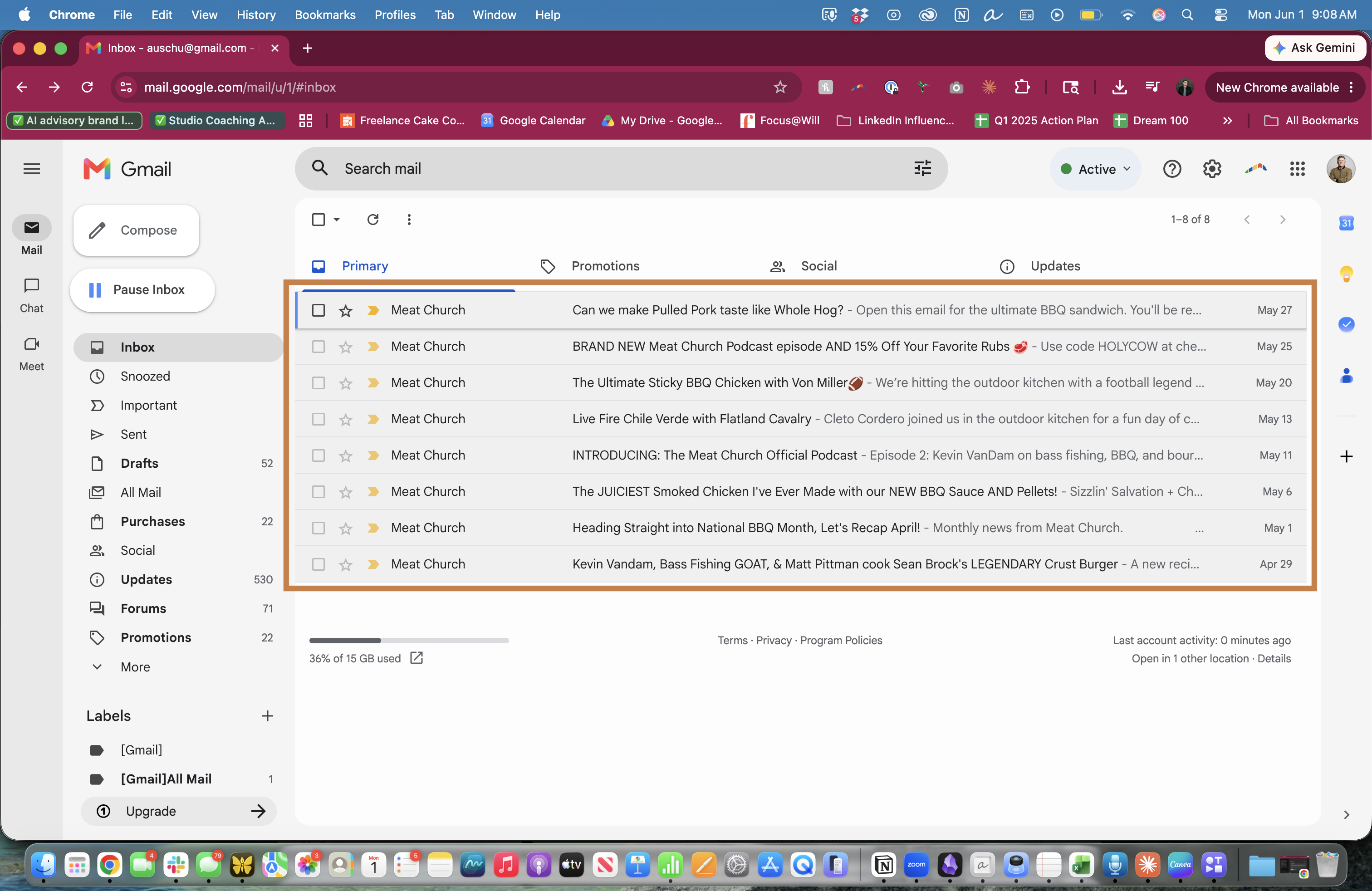
But I can’t help but think that your email list—conservatively, over 100,000+ subscribers for an eight-figure product business with huge social reach—can get you more leverage:
- Your top ten YouTube videos have over 20 million combined views, and every single one teaches a technique: brisket, ribs, pulled pork, turkey.
- You’ve got more than a content library though; you’ve got curriculum.
- Aaron Franklin’s Masterclass got mixed reviews. You can do better.
- You’ve already got an audience and pent-up demand.
Why do I believe that there is pent-up demand?
Your in-person barbecue classes usually sell out fast, and people travel from all over to attend. For example, your half-day barbecue class with Malcolm Reed drew students from sixteen states, Canada, and Italy.
Your community is clearly action-oriented and instruction-hungry, and they run the gamut of weekend grill warriors to burgeoning pitmasters. You already got tons of social proof in the form of hundreds of comments on your videos like, "You made my little girl's first birthday a hit. I totally followed your steps."
You could likely do six figures with a single launch of an inexpensive $99 course based on a handful of your most popular videos (”Brisket on a Pellet Grill,” 5.2 million views; “How to Trim a Brisket,” 1.9 million; “Texas Style Brisket,” 1.1 million). 100,000 subscribers × 1% purchase rate × $99 = $99,000. Maybe Traeger would cross-promote it?
That launch would be just the beginning. It’s a no-brainer to upsell course customers on the bundle of rubs and other products used in the course. And after the initial launch you could create an evergreen funnel, complete with YouTube promotion and organic discovery.
200 purchases per month at $99 is $237,000 per year without you having to do much beyond the initial content creation. Compare those numbers to a cookbook or brand partnership that requires you to lend your audience, or even an equity stake.
2026 may be the exception, but it seems like life is full and busy for you right now. Some strategic recalibration may be in order. I believe in growth by subtraction, and think what I outlined is worth a closer look because it requires no new partnerships, employees, or platforms.
And if courses eventually die as futurist folks are so fond of predicting, then you’ll be well positioned for other strategic ways of repackaging what already exists.
In short, I think you can get more burnt ends from your brisket, and I'd genuinely enjoy a conversation about that if you’re interested.
Shoot me a message here or text me at 615-218-2033.
Meanwhile, I’ll still watch your videos, buy your rubs, and confuse people when I wear that navy snapback and tell them that, yes, my name is Austin Church, but, no, Meat Church BBQ is not my channel.
Cheers to a slow-cooked life you’re not mad at,
Austin L. Church
Austin L. Church is a growth strategist and advisor who works with lifestyle-focused founders doing over $1 million in revenue. His framework, the 7 Levers for Growth, is built around a simple idea: sustainable growth comes from strategic subtraction, not addition and complexity.
